💭 A QUESTION THAT WON'T GO AWAY
"Why do good people suffer while the corrupt prosper?"
Perhaps you've already asked this question while watching the news, or seeing someone close to you being harmed by those who should protect them. Maybe you felt that rage in your chest when you saw an unjust boss getting promoted, or when you learned that an honest neighbor lost their job while those who "have connections" stayed in their positions.
Psalm 58 is born exactly from this anguish. David wasn't philosophizing — he was living this reality firsthand.
📚 UNDERSTANDING THE CONTEXT
"Do you really speak justly, you rulers? Do you judge people with equity?" (v.1)
Imagine the scene: David is being persecuted by people who should protect him. Corrupt judges, bought leaders, authorities who turned their backs on truth. The Hebrew word for "justice" here is צֶדֶק (tsédeq) — it's not just legality, but alignment with God's character.
💡 Linguistic Insight: In verse 1, the Hebrew word אֵלֶם (elem) can mean both "silent" and "powerful." There's a deliberate irony: those who have power to speak for justice are deliberately silent. What a powerful parallel to our days!
Verses 2-5 paint a dark picture: wicked hearts, violence in their hands, intentional deafness to what is right. David isn't exaggerating — he's describing a reality we know well.
❓ WHY DO THESE WORDS EXIST?
"Break the teeth in their mouths, O God!" (v.6)
These words make us uncomfortable, don't they? But here's the point: David is crying out for God's justice, not planning personal revenge.
-
It's a cry for justice, not personal revenge
- David puts the situation in God's hands
- He recognizes that only God can judge with perfection
-
It's an inspired prayer, not a carnal outburst
- The Holy Spirit preserved these words in Scripture
- There is place for holy indignation against injustice
-
It's prophetic about final judgment
- Points to the day when Christ will judge with justice
- Gives us hope that injustice won't have the last word
✝️ JESUS, THE JUST JUDGE
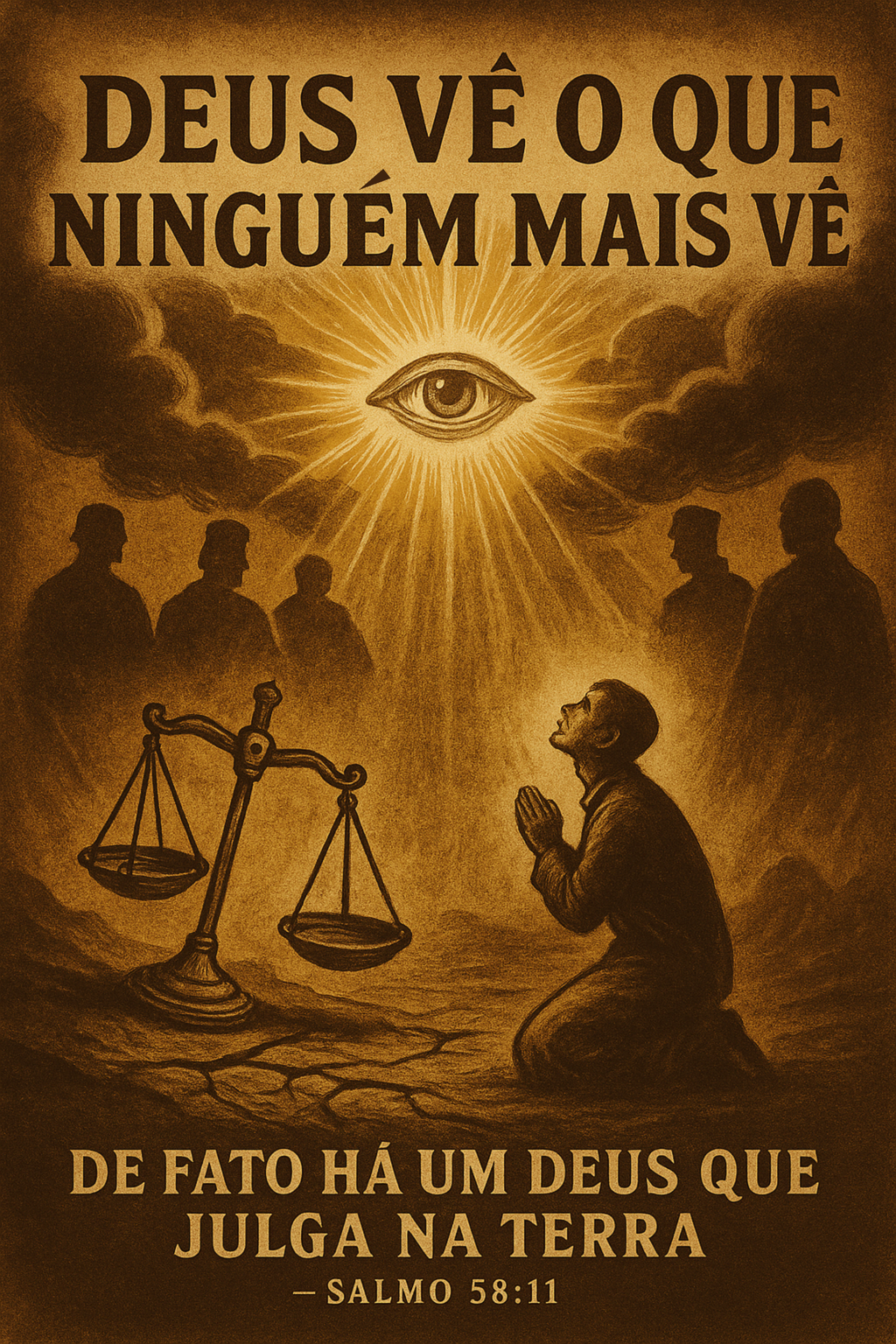
The climax of the psalm is in verse 11: "Then people will say, 'Surely the righteous still are rewarded; surely there is a God who judges the earth.'"
🌟 Jesus fulfills this psalm in three ways:
-
As the Righteous One who suffered injustice
Jesus faced corrupt judges (Pilate), bought religious leaders (Caiaphas), and a perverted system. He lived firsthand what David describes. -
As the Judge who will come with justice
Jesus will return as the perfect judge who cannot be corrupted, accepts no bribes, and shows no favoritism (2 Tim 4:1, Rev 19:11). -
As the Savior who absorbed judgment
On the cross, Jesus drank the cup of God's wrath against all injustice — including ours. Divine justice was satisfied, but not ignored.
🚀 HOW TO LIVE THIS TODAY
📢 1. CRY OUT
- Tell God exactly how you feel about the injustice you see
- Don't spiritualize your pain — God already knows you're upset
- Use the words of Psalm 58 as a model for honest prayer
🙏 Suggested prayer: "Lord, I see injustice around me and it makes me angry. I see [specific situation] and I feel rage. I place this anger in Your hands. You are the just judge — act according to Your will."
🛡️ 2. TRUST
- Remember: God sees all injustice, even when He seems silent
- Anchor yourself in the cross: If God didn't spare His own Son to bring justice, He will bring complete justice
- Rest in divine timing: "Justice delayed is not justice denied" — it will be perfect and at the right time
⚡ 3. CONTINUE
- Don't use injustice as an excuse to be unjust
- Be part of the solution: How can you promote justice in your sphere of influence?
- Channel your indignation: Use your anger against injustice to help the vulnerable
- At work: Be honest even when others aren't. Defend wronged colleagues.
- In the family: Treat everyone with justice, especially the weakest.
- In the community: Support causes that defend the oppressed (homeless people, vulnerable children, elderly).
- In the church: Pray specifically for leaders who face pressure to compromise truth.
📖 THE STORY OF WILLIAM WILBERFORCE
William Wilberforce fought for 46 years in the British parliament to abolish slavery. For decades, he saw corrupt politicians protecting an unjust system for profit. There were moments when he must have felt like David in Psalm 58.
But Wilberforce cried out, trusted and continued. In 1833, three days before dying, he learned that slavery had been abolished throughout the British Empire. Justice was delayed, but it came.
His famous quote: "You may choose to look the other way but you can never say again that you did not know."
🧠 WEEKLY REFLECTION
- Question to meditate on: "In what area of my life do I need to trust more in God's justice instead of trying to 'do justice' with my own hands?"
- Verse to memorize: "Surely the righteous still are rewarded; surely there is a God who judges the earth." (Psalm 58:11)
- Practical challenge: Identify a specific injustice you can help correct this week — and act.
